
Did the 76ers make a mistake trading Jared McCain to the Thunder?
 admin_news

Oklahoma City is making it impossible to ignore that Nick Nurse failed Jared McCain in Philadelphia.
One year ago, McCain was the Rookie of the Year frontrunner before a meniscus tear ended his season with the Sixers. Then McCain tore his right thumb shortly before this current season, delaying his comeback, and he struggled once he returned. But by January, he was moving fluidly and began to drain shots like he always had. The second-year guard’s role had dwindled though. McCain played in 37 of 60 possible games with the Sixers, had a quick leash any time he was on the court, and scored only 6.6 points in 16.8 minutes per game prior to the February trade to OKC.
In return for McCain, the Sixers got a 2026 Rockets first-rounder plus three seconds: one in 2027 (most favorable of Houston, Indiana, Miami, or OKC) plus two in 2028 (from Milwaukee and OKC).
"I'm quite confident that we were selling high. Obviously time will tell," Sixers general manager Daryl Morey said at his deadline press conference when a question implied that Philly had sold low given McCain’s struggles. “We weren't looking to sell. Teams came to us with aggressive offers for him. We thought this return was above the future value for our franchise. The only higher point would've been during his run last season.”
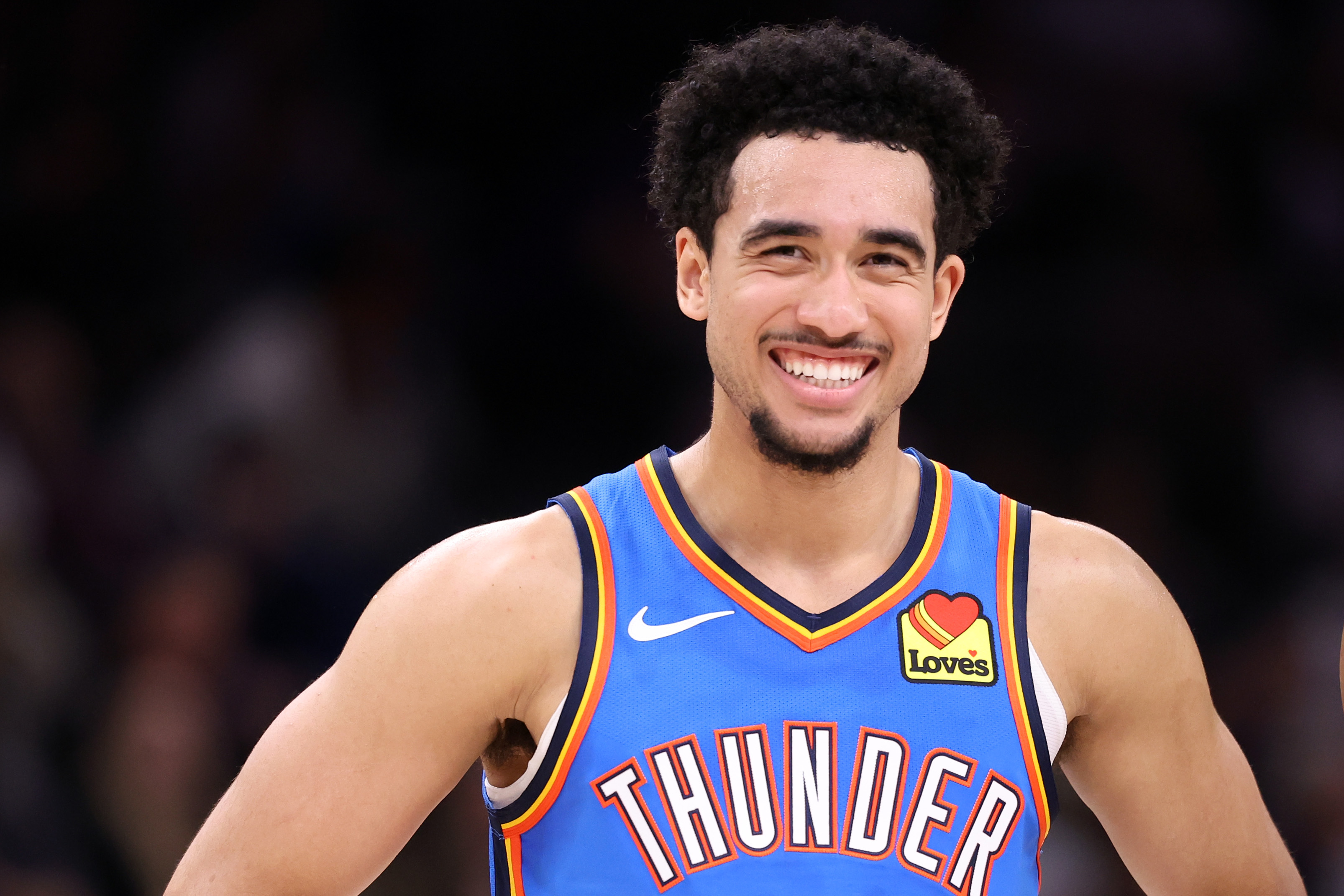
About that run to begin his career. McCain fell somewhere in the middle of the scale between Seth Curry and Steph Curry. McCain scored over 25 points four times, hit at least four triples six times, and had a game with 34 points and 10 assists. All in just 23 games. Before he was sidelined, McCain had surged from a +3500 long shot to win Rookie of the Year in the preseason to an odds-on favorite. Depending on the sportsbook, his odds in the week leading up to the injury were between -160 and -450. McCain leans more toward the Seth side as a good role player and sniper from 3-point range, but there are glimmers of stardom.
“He had a really good start to his rookie year, then got hurt and was out for a long time, got hurt at the beginning of this year, and had just been getting himself back,” Thunder head coach Mark Daigneault said of McCain at the time of the trade. “We think he’s got some runway to develop and that’s exciting. But at the same time, we think he has skills that can strengthen our team right now.”
That’s precisely what has happened. In just 11 games, he already has three performances with 20 or more points — including in a win against the Bulls on Tuesday night, the same night the Sixers could score only 91 and lost by 40 to the Spurs. His best moment came in the fourth quarter of a Thunder win over the Nuggets last week, hitting bucket after bucket. He’s playing with a freedom that was nowhere to be found this year in Philly. You can see it every single time he touches the ball.
Before the trade, McCain was scoring only 13 points per 75 possessions on 48.3 effective field goal percentage. Way down from last season’s averages of 19.4 per 75 on a 55.3 effective field goal. In Oklahoma City? 20.5 per 75 on 59.2 effective. Close to identical to his healthy rookie self. The player didn't change. The situation did.
“I ain't gonna lie and say I don't miss Jared,” Maxey said after Philadelphia’s blowout loss on Tuesday. “But I’m happy for him.”
Nurse couldn’t make McCain work with Maxey, Edgecombe, and even another backcourt player like Quentin Grimes. Having too many small guards is hard to work defensively. And Maxey and Edgecombe both would already have to share on-ball touches with Joel Embiid and Paul George when they’re active. But a crowded backcourt and a number of primary creators is not a legitimate excuse when OKC has Shai Gilgeous-Alexander, Jalen Williams, Isaiah Joe, Cason Wallace, Ajay Mitchell, and Nikola Topić. If any team didn’t have space to add another guard, it was the Thunder. Yet they seemingly figured out how to use McCain in one practice.
The Thunder are using McCain in actions that put his shooting prowess on display: He has logged more than double (21) the amount of dribble handoffs with OKC than he did (eight) in more than triple the games in Philly. They are essentially using him like Joe, but an elevated version with more creation and playmaking skills. Once every guard on OKC is healthy — Williams and Mitchell are sidelined — McCain may see his minutes impacted. But he is the best shooter of the bunch and can still handle the ball too. McCain is running 6.8 pick-and-rolls per game in OKC, up from the 4.4 he ran with the Sixers this season (though down from his 12.3 as a rookie). Bottom line is the Thunder run actions designed to get McCain the ball. They put him in situations built around his strengths. Nurse, by contrast, shrunk McCain by limiting his actions, turning a promising young guard into a passive role player.
With that in mind, I get what Morey was trying to say by “sell high.” He's not saying McCain is overachieving or will get worse. No. Morey is arguing that McCain's value was only going to decline in Philadelphia, given how minimal of a role he had behind Maxey, who has emerged as an All-NBA candidate, and Edgecombe, who is a first-team rookie team lock. But what Morey is leaving out is the second half of that sentence: McCain’s value was declining because Nurse couldn’t figure out how to play him, which manufactured a situation where it made any sense to even trade one of their better young players.
“We thought that the draft picks we got will help us more in the future and could have helped us this deadline,” Morey said at his trade deadline presser. “The picks we got were offered to many teams and nothing materialized for a player that we thought could move the needle.”
Executives have said that the Sixers were actively making calls pre-deadline, though nothing seemed remotely close. Some sources suggest that Morey was star hunting with Kawhi Leonard being a name that was connected to Philly. But nothing happened. So Embiid, Maxey and the team saw McCain get dealt, the tax get ducked, and no pieces brought in to help.
“The trade deadline was difficult,” Maxey said on Tuesday. “That's something that we have to put in the rearview mirror."
One thing is clear: Sixers owner Josh Harris wanted to get under the luxury tax — again.
Since Harris purchased the team in 2011, the Sixers have paid the luxury tax once (during the 2019-20 season following the Al Horford signing). Over the last two deadlines, the Sixers traded a combined three second-round picks to dump salaries to duck the tax in both 2024 and 2025. This year’s maneuvering was made easier because the 25-game suspension of George gave them a tax credit of $5.8 million, which brought them to just $1.3 million over the tax. Moving McCain got them under, then salary dumping Eric Gordon left wiggle room to sign Dominick Barlow to a standard contract and possibly add a player off the buyout market.
“I love all the guys that are in here. I think we got a shot,” Embiid said prior to the trade deadline. “In the past we’ve been ducking the tax, so hopefully we think about improving, because we got a chance.”
We’ve seen a lot of bad owner decisions over the years. This is up there. You have Embiid, still one of the 15 best players on the planet when he’s healthy, in the final chapter of his prime, a closing window, and your response is to pinch pennies to avoid the luxury tax? The luxury tax that exists specifically for a contending situation? Indefensible doesn’t even cover it. It’s awful for the fans, and it’s awful for Embiid, who has given everything he has to this city, played through injuries, and watched the franchise nickel-and-dime itself time and time again.
Now Philly sits in this strange purgatory where they kind of, sort of think they have a shot. But one of their best young players is dropping buckets in crunch time for Oklahoma City. It doesn’t make sense. Nothing ever does in Philly. But the Sixers did this to themselves.